
Adam and Amanda Moore’s journey as caregivers to their son, Jackson, began with a growing sense of concern. As parents of fraternal twins, they couldn’t help but see the differences between Jackson and his neurotypical brother, Baden, early on. Adam recalls a telling moment when a doctor examined Jackson: “She took a look at him and knew. She said he was very, very tense. It was the first, almost like, ‘Ah, we knew it.’”
John Sudgen and Ana Monaldi shared a similar experience with their son, Sebastian. Ana remembers those early years: “One of the developmental pediatricians said, ‘he’s awfully quiet.’ He didn’t sleep at all. He would wake up at 2:00 AM and didn’t sleep again, and his seizures started when he was two and a half.” She adds, “the hardest part was not knowing what he had. Those three years were filled with uncertainty. We really felt very alone because we felt the specialists couldn’t even help us.”
After years of searching for answers, both the Moore and Sudgen families finally received a diagnosis: their sons both had Angelman syndrome (AS), a rare genetic neurological disorder1 that affects approximately one in 15,000 individuals worldwide.1
Dr. Elizabeth Jalazo, pediatric geneticist at the University of North Carolina at Chapel Hill and Angelman Syndrome Foundation (ASF) Medical Director, explains the complexities these families face, “Sleep challenges and seizures can be really difficult to manage in the first year of life and beyond. We often see a lack of typical speech development and significant expressive language deficits. While individuals with AS have strengths in the social domain, these early developmental differences are key indicators.”2
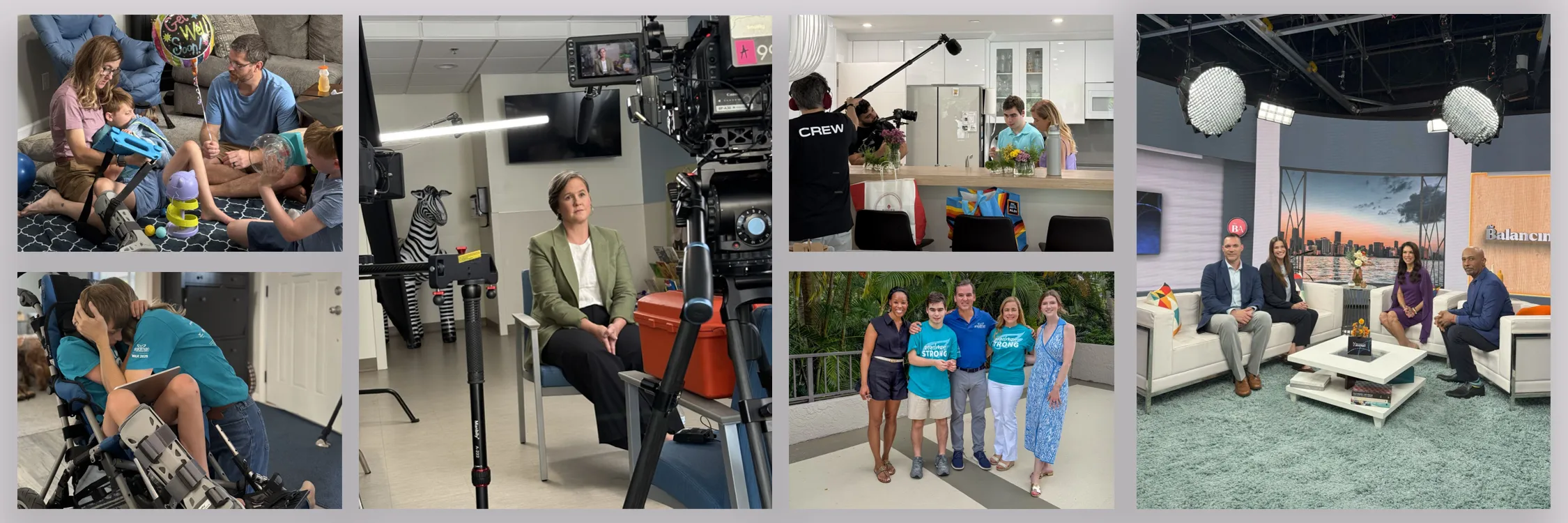
To illuminate the experiences of caregivers like the Moores and the Sudgens, Ionis partnered with Lifetime Television to produce “Behind the Mystery of Angelman syndrome,” an episode on the network’s morning show that dives into the lives of those affected by AS.
By sharing their stories, families, advocates and experts paint a vivid picture of what life with AS looks like – the obstacles, the triumphs and the moments of strength that define their journeys. They share their experiences navigating the path to diagnosis, the hallmark signs and symptoms of AS and, most importantly, the incredible joy that their children with AS bring to their lives.
Go Behind the Mystery and watch the full episode below to see how this incredible community works together to raise awareness and drive progress for this rare condition.
Finding Strength in Community
For many families, receiving an AS diagnosis after years of uncertainty can feel both devastating and, in a sense, liberating, as it’s a moment that redefines their path forward.1
John and Ana felt exactly this when Sebastian was diagnosed. John shares, “It was bittersweet to get the results, because until you know what it is, you always hold on to hope that he’ll grow out of it.”
For Adam and Amanda, Jackson’s diagnosis carried a similar mix of emotions. “I do remember there was a moment that I was like, ‘okay, what are you going to do?’ Are you going to wallow in grief? Are you going to allow it to take over you? Or are you going to do everything you can to make Jackson’s life, and Baden’s life, the best possible life that they deserve,” says Amanda.
In grappling with the weight of an AS diagnosis, both families turned to the Angelman Syndrome Foundation (ASF), another pivotal moment in their journeys. Each family became deeply involved with the organization, channeling their experiences into leadership – Amanda now serves as the Chief Executive Officer and John as Vice President of the Board of Directors at ASF.
“Seven years in, what AS has brought into our life as far as people and the connections is unbelievable,” Amanda shares. Despite the challenges, the Moores and Sugdens have created wonderful, fulfilling lives for both of their sons. Today, the families are dedicated to giving back to the community that continues to support them and to helping others who find themselves on a similar path.
Advancing Research Through Collaboration
Through longstanding collaboration with advocacy organizations like the ASF and the Foundation for Angelman Syndrome Therapeutics (FAST) and a legacy of scientific innovation in treating complex neurological conditions, Ionis is working to bring transformative treatments to people who need them most.
“Ionis has been fortunate to collaborate with the AS community for over a decade, integrating their perspectives into our clinical development programs and educational resources,” says Holly Kordasiewicz, Ph.D., Senior Vice President of Neurology at Ionis. “By keeping the community’s insights at the heart of what we do, we can celebrate progress and learn from challenges together - building greater awareness and visibility for everyone involved. This transparency is essential as we work to advance our science and bring new treatment options closer to patients.”
Ryan Fischer, Chief Operating Officer of FAST emphasizes the community’s role in advancing research, noting in the episode that, “the bravery and commitment of families participating in these initiatives are invaluable. Their involvement has significantly contributed to our understanding and progression in developing potential therapies.”
Shaping the Future of Neurology and Hope
Ionis has been at the forefront of discovering and developing medicines for neurological diseases, including the first approved treatments for spinal muscular atrophy and SOD1-ALS. The company’s current research pipeline includes investigational therapies for conditions with few or no disease modifying treatments. These include rare diseases like AS, for which Ionis currently has a medicine in Phase 3 development, as well as Alexander disease and other more common conditions like Alzheimer's disease.
The strength and resilience of the AS community demonstrate the power of what’s possible through connection and shared purpose – families who refuse to give up hope, and advocates, physicians and researchers committed to advancing meaningful change. Their courage and spirit serve as a reminder that beyond the science, it’s joy, love and connection that truly define progress and give it meaning.
References:
Angelman Syndrome Foundation. About Angelman Syndrome. Angelman Syndrome Foundation. https://angelman.org/about-angelman-syndrome/. Accessed October 29, 2025.
Yale Medicine. Angelman Syndrome. Yale Medicine. https://www.yalemedicine.org/conditions/angelman-syndrome. Accessed October 29, 2025.