


Targeting disease through RNA
At Ionis, we’re focused on harnessing advanced technology to create medicines that target and interact with both RNA and DNA to treat a variety of conditions – from common cardiometabolic disorders to intractable neurological conditions and rare diseases with few or no treatment options.
Our approach to medicine began with a simple question: what if we could address the underlying root cause of disease instead of just treating symptoms? The answer begins with understanding how information flows from DNA to RNA to proteins, the process that drives nearly every function in the body.
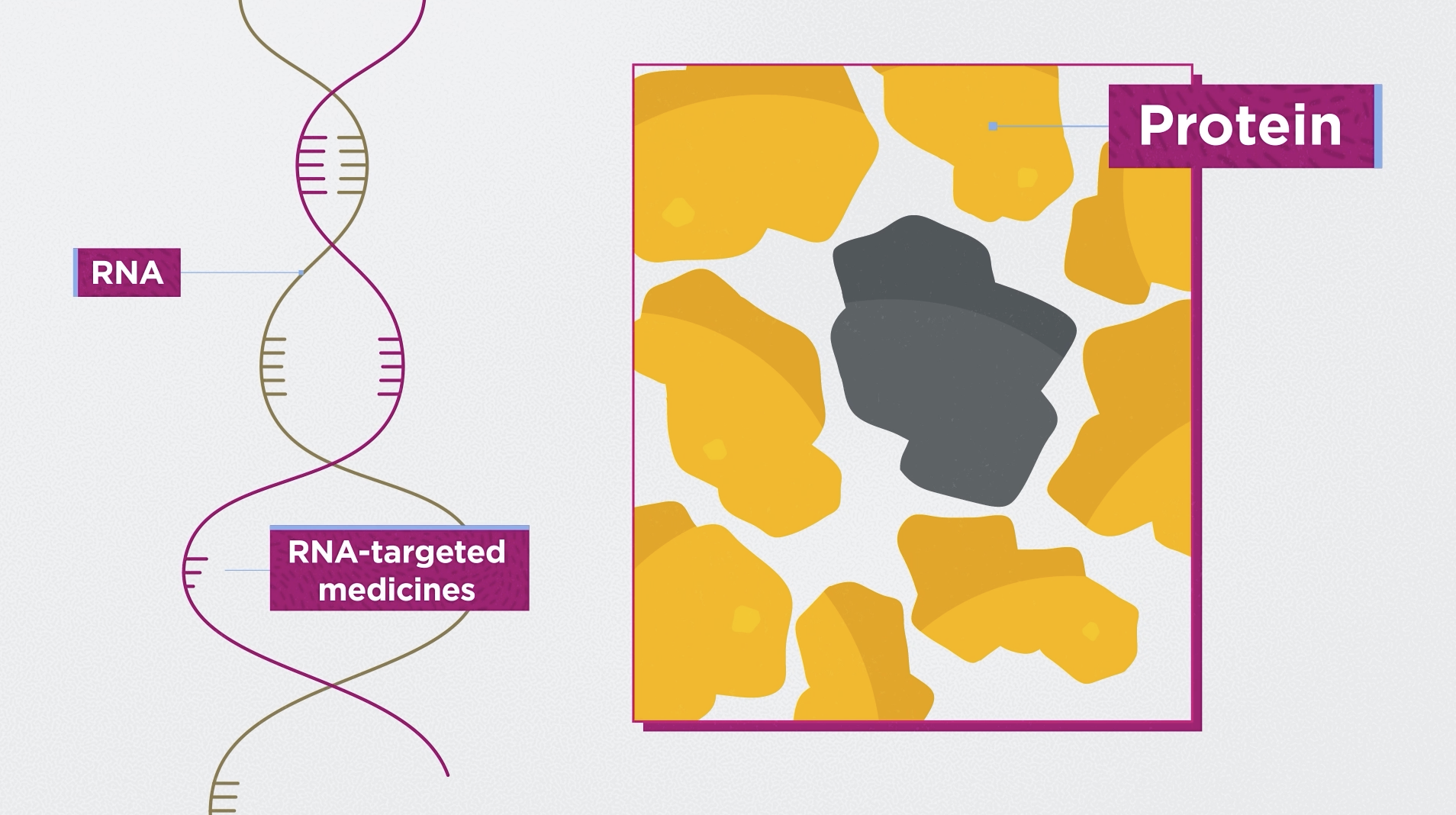
Inside every cell is DNA, which contains the genetic instructions that help our bodies function. That information is copied into RNA, which is used as ‘messengers’ to carry out those instructions including directing the production of proteins, the molecules that keep our bodies functioning. Many diseases occur when this process breaks down, when the wrong proteins are made, too much is produced or not enough is made at all.
Today, many medicines work by managing problematic proteins after they have already been made. Our medicines are designed to act earlier, working with RNA to help reduce, restore or modify the production of problematic proteins before they can contribute to disease.
We use small, precisely designed strands of genetic material called oligonucleotides that bind to specific RNA by matching it, much like cells do naturally when they make their natural DNA and RNA. This allows us to work with the genetic instructions that influence how proteins are made.
For example, when a harmful protein is overproduced, our medicines can bind to its RNA and signal the cell to break it down, preventing that protein from being made. In other cases, we adjust how RNA is processed in order to produce a needed or more functional protein when one is missing, deficient or not working properly.
The Right Approach for Each Disease
We pioneered the discovery and development of antisense oligonucleotides (ASOs), a class of RNA-targeted medicines now used to treat multiple diseases. Today, we build on that foundation with multiple approaches, allowing us to choose the right strategy for each disease.
These approaches include:
- Antisense oligonucleotides (ASOs): Bind to RNA to reduce or adjust protein production
- siRNA (RNA interference): Use natural cellular processes to silence disease-related genes
Because different diseases require different strategies, we match each approach to the underlying biology rather than relying on a single solution.
Combined with ongoing advances in medicinal chemistry, this lets us continue improving how our medicines perform for patients.
Targeting the Right Cells with Precision
Reaching the right cells in the body is essential to making genetic medicines work.
We develop targeted delivery technologies that can be paired with our RNA and DNA approaches to guide therapies to the cells most relevant to a disease.
- Liver targeting: Guides delivery to liver cells
- Muscle targeting: Enables delivery to skeletal and heart muscle
- Brain delivery technologies: Designed to reach the central nervous system
By combining these delivery technologies with our core approaches and continuing to develop new ways to reach additional tissues and cells, we are expanding what genetic medicines can do and the diseases they may be able to treat.